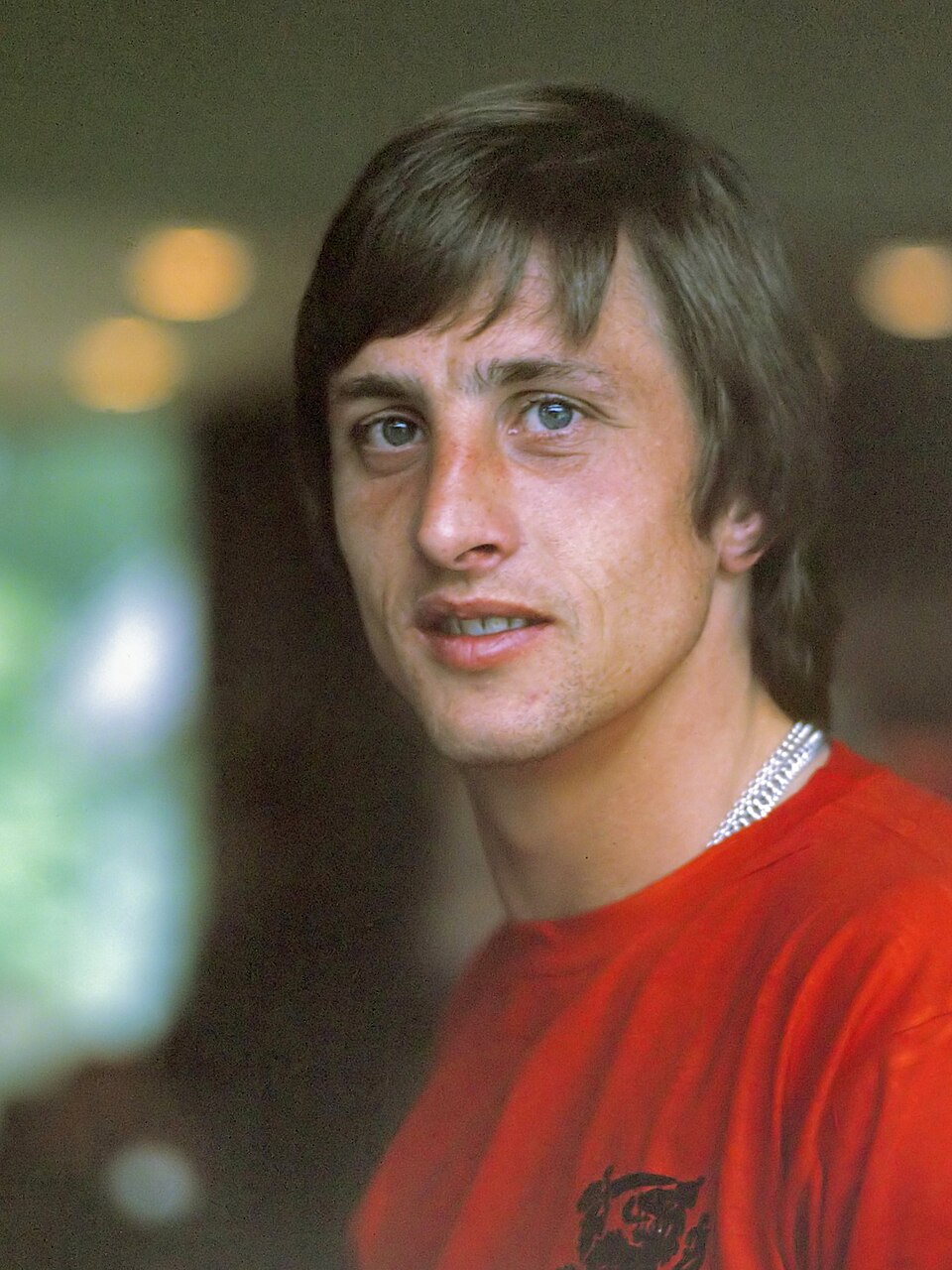
Cruyff's Visionary Playmaking: Shaping Ajax and Barcelona
Johan Cruyff, a name synonymous with footballing revolution, was more than just a player; he was an artist, an innovator, and a prophet of the beautiful game. His legacy, deeply embedded in the DNA of both Ajax and FC Barcelona, continues to inspire generations, shaping philosophies and etching indelible
erinnerungen (memories) in the hearts of fans worldwide. From his dazzling displays on the pitch to his profound tactical mind off it, Cruyff laid the foundation for a style of football that prioritized intelligence, technique, and collective fluidity. It is a vision that figures like Joan Laporta, a steadfast proponent of the Cruyffian model, have strived to preserve and implement, ensuring his influence remains a guiding light.
The Genesis of Genius: Cruyff's Ajax Era and Total Football
Born and bred in Amsterdam, Johan Cruyff joined the youth development squad of his beloved Ajax when he was just 10 years old. This was the crucible where his prodigious talent was forged, making his senior team debut at a mere 17. It was during this formative period at Ajax that Cruyff became the quintessential embodiment of "Total Football," a tactical system pioneered by coach Rinus Michels. This revolutionary approach saw players fluidly interchange positions, demanding technical versatility, tactical awareness, and an unyielding commitment to attacking football. Cruyff, with his unparalleled vision and innate understanding of space, was the system's brain and beating heart. He could drop deep to orchestrate play, ghost past defenders with deceptive speed, or score with breathtaking audacity.
His time at Ajax was nothing short of legendary. Under his imaginative playmaking and captaincy, Ajax soared to unprecedented heights, claiming an astonishing six league titles, four national cups, and a historic hat-trick of European Champion Clubs’ Cups (now the UEFA Champions League). These successes cemented his status as a global superstar and earned him the prestigious European Footballer of the Year award in 1971. The
erinnerungen from this era are of a team that danced across the pitch, a symphony conducted by Cruyff, demonstrating that football could be both effective and profoundly beautiful. His tenure at Ajax created a blueprint for academy development and tactical innovation that would inspire clubs for decades.
Catalonian Canvas: Cruyff's Barcelona Revolution as a Player
In 1973, Cruyff made a momentous transfer to FC Barcelona, a move that would irrevocably alter the course of the club's history. Barcelona, languishing without a league title for 14 years, was desperate for a catalyst. Cruyff, already a three-time European Footballer of the Year (1971, 1973, and eventually 1974 during his first Barca season), arrived with the weight of expectation on his shoulders – and he delivered. As captain, he spearheaded a revitalized Barcelona team to win the Spanish League championship in 1974, emphatically ending their long drought. This triumph, sealed with a memorable 5-0 victory over rivals Real Madrid, etched his name into Catalan folklore. Barcelona also achieved runner-up positions in 1976 and 1977 under his leadership, consistently challenging at the top.
Cruyff brought more than just goals and assists; he brought a philosophy. He instilled the principles of Total Football into the Spanish game, transforming Barcelona's playing style from a pragmatic approach to one based on possession, movement, and attacking flair. His "temperamental" nature was often a sign of his fierce commitment to perfection and his insistence on playing the game the right way. This period was not just about trophies; it was about sowing the seeds of an identity that would define Barcelona for generations. The
erinnerungen of his playing days at Camp Nou are not just of a brilliant individual, but of the birth of a cultural shift, a vision for football that would become uniquely Catalan. His time as a player at Barcelona was foundational, setting the stage for his even more profound impact as a coach and ideologue. For a deeper dive into his playing career at the club, see
Cruyff at Barcelona: Captaining the 1974 Spanish League Win.
The Architect of Modern Football: Cruyff's Enduring Philosophy and Laporta's Embrace
Cruyff's influence extended far beyond his playing days. He returned to both Ajax and Barcelona as a coach, further embedding his revolutionary philosophy. At Barcelona, he managed the iconic "Dream Team" which won four consecutive La Liga titles and the club's first European Cup in 1992. But his greatest legacy as a coach was arguably his role in shaping La Masia, Barcelona's fabled youth academy. Cruyff insisted that the academy players should train and play according to the same tactical principles as the first team: 4-3-3 formation, possession-based football, technical excellence, and positional fluidity. He prioritized intelligence and skill over physical prowess, a paradigm shift that would produce talents like Pep Guardiola, Xavi, Andrés Iniesta, and Lionel Messi.
This visionary approach created a clear identity for Barcelona, a style of play that became recognizable and revered worldwide. It's here that the interconnectedness of
Cruyff, Laporta, and their shared erinnerungen becomes strikingly clear. Joan Laporta, during his two stints as FC Barcelona president (2003-2010 and 2021-present), has been one of the most fervent guardians of Cruyff's philosophy. Laporta understood that Barcelona's success wasn't merely about winning, but about winning with a distinct, Cruyff-inspired style. He famously appointed Pep Guardiola, a direct disciple of Cruyff, as head coach, leading to one of the most dominant eras in football history. Laporta's commitment ensured that the club remained true to its roots, emphasizing La Masia and the unique playing style that Cruyff championed.
**Practical Tip:** Cruyff's philosophy teaches that understanding and space are as crucial as raw talent. For aspiring players or coaches, focus on developing tactical intelligence, encouraging fluid movement, and mastering basic technical skills. Emphasize decision-making under pressure and playing with your head up, always aware of your teammates and opponents. These are the cornerstones of Cruyff's approach, applicable at any level of the game. For more details on his overall career, read
Johan Cruyff's Illustrious Career: Ajax, Barcelona, and Honours.
Cruyff's Legacy: A Vision That Transcends Time
The profound impact of Johan Cruyff extends far beyond the silverware he won. His influence is visible in the academies of Ajax, which continue to produce world-class talent, and in the unwavering commitment of FC Barcelona to its unique playing style. The "tiki-taka" that dominated world football for years under Guardiola was a direct evolution of Cruyff's principles. His insistence on an attacking, beautiful, and intelligent game left an indelible mark on football, proving that the sport could be both entertaining and effective.
The
erinnerungen of Cruyff are not merely nostalgic recollections of past glories; they are living testaments to a philosophy that continues to thrive. His spirit lives on through the players he influenced, the coaches he mentored, and the presidents like Joan Laporta who fiercely protect his legacy. The shared vision between
Cruyff, Laporta, and the enduring erinnerungen of their commitment to a specific, beautiful way of playing football, has ensured that Cruyff’s contribution remains central to understanding the modern game.
In essence, Cruyff taught the world that football is played with the head, not just the feet. His imaginative playmaking, both on and off the pitch, transformed two of Europe's biggest clubs and continues to resonate globally.
Conclusion
Johan Cruyff was a true footballing luminary, a visionary playmaker whose impact stretched from the hallowed grounds of Ajax to the sun-drenched stadium of Camp Nou. His revolutionary ideas, particularly Total Football and his philosophical approach to player development, reshaped the very essence of the sport. His legacy is not just etched in trophy cabinets but in the playing styles of countless teams and the minds of footballing purists. Through his disciples and fervent admirers like Joan Laporta, Cruyff's enduring
erinnerungen continue to guide, inspire, and define the pursuit of beautiful, intelligent football. His genius ensured that the game would never quite be the same, leaving behind a rich tapestry of tactical innovation and unforgettable moments that will be cherished forever.