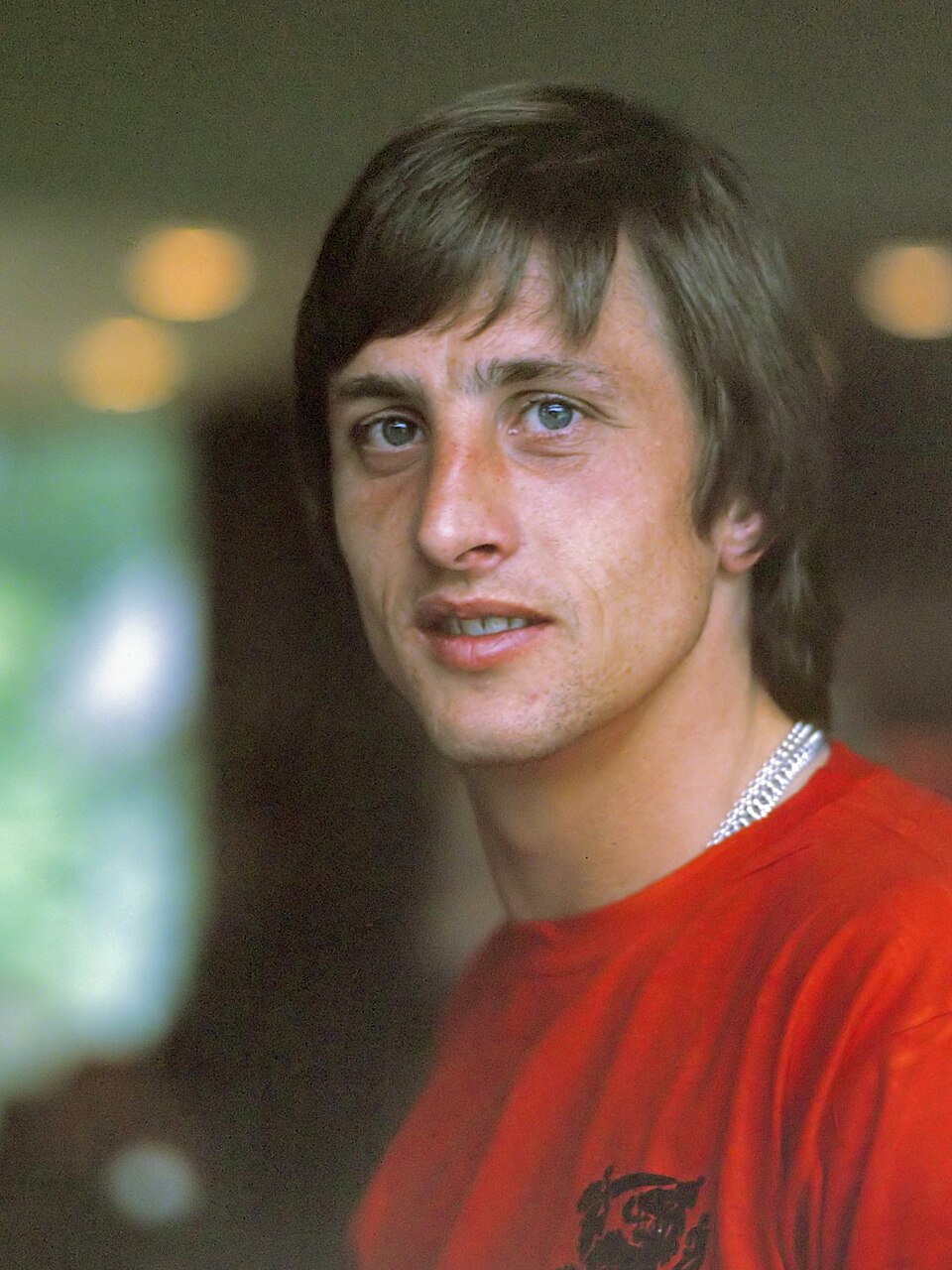
Johan Cruyff: The Architect of Modern Football Through Ajax and Barcelona
Johan Cruyff, a name synonymous with revolutionary football, stands as one of the game's most influential figures. His illustrious career, primarily with Dutch giants Ajax and Spanish powerhouse FC Barcelona, didn't just accumulate an impressive haul of honours; it fundamentally reshaped footballing philosophy, leaving an indelible mark that resonates to this day. Born in Amsterdam, Cruyff's journey from a prodigious youth talent to a global icon is a testament to his unparalleled skill, visionary intellect, and unwavering belief in beautiful football. His genius transcended mere playing, evolving into a coaching and philosophical legacy that continues to inspire generations, forging powerful erinnerungen (memories) for fans and influencing leaders like Joan Laporta at Barcelona.
The Genesis of a Legend: Ajax and Total Football
Johan Cruyff's story began in the heart of Amsterdam, where he joined the youth development squad of Ajax at the tender age of 10. His raw talent was evident, but it was his innate understanding of the game and relentless drive that set him apart. By 17, he had made his debut with the senior team, a moment that would soon unleash a seismic shift in football tactics. It was at Ajax, under the tutelage of Rinus Michels, that Cruyff became the embodiment of "Total Football" – a fluid, interchangeable system where players could seamlessly switch positions, dictating play with intelligent movement and relentless pressing.
Cruyff was the pulsating heart of this revolution. His role as a false nine, dropping deep to create space and orchestrate attacks, was unprecedented. He wasn't just a striker; he was a playmaker, a winger, a midfielder – all rolled into one. This imaginative playmaking saw Ajax dominate European football, culminating in an extraordinary period of success. During his initial stint with Ajax, Cruyff helped the club secure an incredible six league titles, four national cups, and, most famously, three consecutive European Champion Clubs’ Cups (now the UEFA Champions League) from 1971 to 1973. His individual brilliance was recognized globally, earning him the coveted European Footballer of the Year award in 1971, 1973, and 1974.
Tip for Aspiring Players and Coaches: Cruyff's success with Total Football underscores the importance of tactical flexibility and intelligent movement without the ball. Encourage players to understand multiple positions and develop their spatial awareness. This not only makes a team less predictable but also fosters a deeper understanding of the game's flow.
A New Era in Catalonia: Cruyff's Barcelona Arrival
In 1973, after etching his name into Ajax's history books, Cruyff made a momentous transfer to FC Barcelona. This move was more than just a player changing clubs; it was a cultural and sporting statement. Spain was still under the Franco dictatorship, and Cruyff's decision to name his son "Jordi" after Catalonia's patron saint endeared him instantly to the fiercely proud Catalan people. His arrival signaled a new dawn for a club yearning for success, particularly against their perennial rivals, Real Madrid.
Cruyff's impact was immediate and profound. As captain, his leadership on the pitch was undeniable, his vision transformative. He injected the principles of Total Football into the Catalan side, demanding a style of play built on possession, intricate passing, and relentless attacking. In his very first season, he led Barcelona to their first Spanish League championship in 14 years, triumphing dramatically over Real Madrid with a famous 5-0 victory at the Santiago Bernabéu. This title, achieved in 1974, remains one of the most cherished memories for Barcelona fans, cementing Cruyff's legendary status in Catalonia. While Barcelona would finish runner-up in 1976 and 1977 during his tenure, Cruyff's presence alone elevated the club's profile and instilled a belief in a distinct playing identity.
His temperamental nature, often highlighted by critics, was merely an extension of his intense passion and relentless pursuit of perfection. He challenged conventional thinking, both on and off the pitch, always seeking ways to innovate and improve. This uncompromising spirit was a key factor in his ability to inspire teammates and transform clubs.
Beyond the Pitch: The Enduring Legacy and Philosophy
While his playing career was extraordinary, Johan Cruyff's influence arguably deepened and broadened during his coaching tenure, particularly at FC Barcelona. This is where his philosophy truly blossomed, shaping the very DNA of the club. His return to Barcelona as manager in 1988 ushered in the "Dream Team" era, which captured four consecutive La Liga titles and, crucially, Barcelona's first-ever European Cup in 1992. But more significantly, Cruyff laid the foundation for La Masia, Barcelona's famed youth academy, instilling a uniform playing style from the youngest age groups to the first team.
This commitment to a specific, possession-based, attacking style of football became Barcelona's identity, a "philosophy" rather than just a tactic. This philosophy, rooted in his Total Football playing days, emphasized technical proficiency, tactical intelligence, and a belief in nurturing homegrown talent. It is this profound and enduring legacy that figures like Joan Laporta, multiple-time president of FC Barcelona, have not only recognized but actively championed. For Laporta and countless others within the club and beyond, Cruyff's principles formed the bedrock of Barcelona's modern success, and the powerful erinnerungen of his transformative impact continue to guide strategic decisions and footballing ideals.
Cruyff's insights were not limited to tactics; he famously quipped, "Playing football is very simple, but playing simple football is the hardest thing there is." This encapsulates his belief in efficiency, intelligence, and the beauty of fundamental skills. The "Cruyff Turn," a deceptive dribbling move, became an iconic symbol of his ingenuity and flair. His influence on modern managers like Pep Guardiola, Xavi Hernández, and Ronald Koeman is undeniable, demonstrating how his visionary playmaking and coaching philosophy continue to shape football's elite.
Practical Insight: Cruyff's emphasis on youth development and a unified club philosophy offers a valuable lesson for any organization. Investing in foundational principles, consistently nurturing talent from within, and ensuring a cohesive vision from top to bottom can lead to sustained excellence and a strong institutional identity.
Honours and Accolades: A Testament to Greatness
Johan Cruyff's trophy cabinet is as impressive as his tactical innovations. His playing career alone is decorated with an array of individual and team honours:
- European Footballer of the Year (Ballon d'Or): 1971, 1973, 1974 (three times, a record at the time)
- With Ajax:
- Eredivisie (Dutch League): 6 titles
- KNVB Cup (Dutch National Cup): 4 titles
- European Champion Clubs’ Cup: 3 titles (1971, 1972, 1973)
- With FC Barcelona:
- La Liga (Spanish League): 1 title (1974)
- International Recognition:
- FIFA World Cup Runner-up: 1974 (with the Netherlands national team)
- FIFA World Cup Golden Ball: 1974
These accolades only tell part of the story. Cruyff's true honour lies in his enduring impact on the game's aesthetic and intellectual dimensions. He didn't just win; he inspired, he innovated, and he challenged the status quo, leaving an everlasting legacy that continues to influence how football is played, taught, and appreciated around the globe.
Johan Cruyff passed away on March 24, 2016, in Barcelona, but his spirit lives on. The memories of his breathtaking performances, his audacious innovations, and his profound philosophical contributions ensure that the name Johan Cruyff will forever be etched into the pantheon of footballing legends. For fans, players, and leaders like Joan Laporta, the powerful erinnerungen of Cruyff's visionary genius serve as a constant reminder of what football can and should be: a beautiful game, played intelligently, and with unwavering passion.